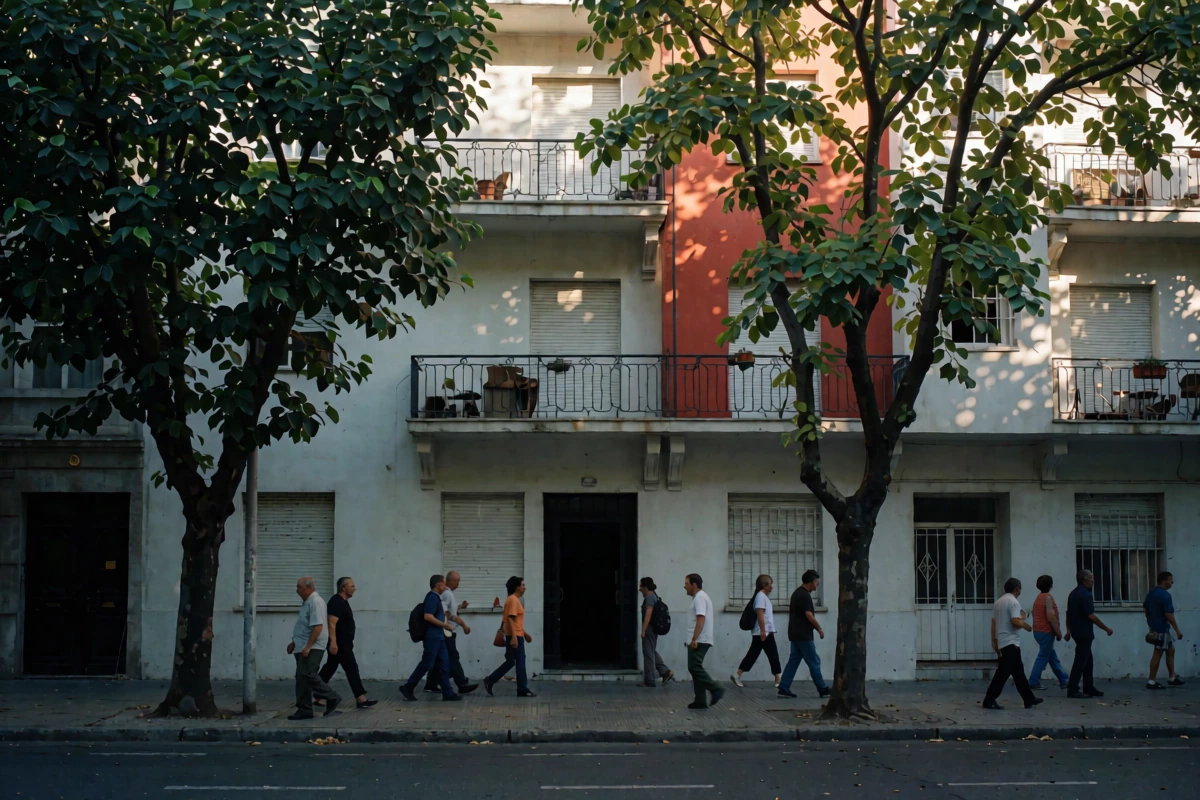
Visit the street when you would actually use it
Neighbourhood names cover blocks with different buildings, traffic, pavement access, construction, and noise. Walk the immediate area and look at the entrance, lighting, and route to the services that matter. Inside the unit, observe light and ventilation rather than assuming a popular district label guarantees a suitable apartment.
Return at another relevant hour when the commitment is substantial. Evening activity, street noise, or building access may appear different from a first daytime viewing. Put those observations in plain language: what was seen, when it was seen, and what remains unknown. That is more useful than repeating a stereotype about who lives in the area.
No reviewed source provides a verified count of Canadian residents by neighbourhood. Use social posts and property listings as leads, not population evidence.
Travel time belongs to the household
Buenos Aires publishes official transport information. Pair it with the trips expected to repeat from the address, such as work, school, care, groceries, or appointments. Measure door to door. Include walking, transfers, waiting, the return journey, and a realistic backup.
Third-party estimates can help form a first route, but they may miss a service change or the time needed by a particular person. Travel the route at the hour it will usually occur and consider the household's mobility and schedule. A generic commute score cannot do that work.
Services and rental terms must agree
Nearby groceries, healthcare, green space, and other recurring needs can make an address practical, but they do not cure an unsuitable agreement. Read the payment schedule, utilities, and furnishings in the actual rental documents. Then check notice, inventory, and repair terms. The complete written cost matters more than an attractive headline price.
The reverse is also true. Favourable terms do not correct a location that repeatedly disrupts work, care, or daily errands. Compare the unit and the address together, and seek qualified help when a contract clause or legal consequence remains unclear.
For each serious option, keep a short review log. Include visit times, route checks, observed conditions, quoted terms, and unanswered questions. The log allows two addresses to be compared without relying on whichever visit is easiest to remember.
Preserve a way to learn more
An area that suits one person may fail another household's schedule. When an important condition has not been observed, keep a flexible first arrangement until the exact street, tested journeys, and written agreement answer the remaining questions.
Choose a neighbourhood for your route
Where expats live in Buenos Aires is less useful than where your own week works. Compare the address with work, school, health, shops, transport, parks, language support, and the people you need to see. Visit at the expected morning and evening times. A neighbourhood that looks convenient on a map can feel different when a route, entrance, or service is busy.
Ask a listing contact for the full cost, building rules, services, repair process, and access details. Verify the current source and keep the address private until the provider is known. A community post can identify an area to explore, but it cannot prove that a specific home, price, or contract is suitable.
Notice the ordinary signals that matter to your household. Check the walk to transport, the return route, noise at night, delivery access, nearby care, and what happens during rain or a public holiday. Write observations separately from recommendations so a single visit does not become a permanent label about the neighbourhood.
If the area works, test a short and reversible arrangement before a long commitment when possible. Keep the date and source behind the decision. Housing, provider terms, public schedules, and community activity can change, so recheck a consequential choice with the named authority or qualified professional.
Common questions
Which Buenos Aires neighbourhood has the most Canadian residents?
The sources used here do not provide a verified neighbourhood count for Canadian residents. Avoid treating a social post or property listing as population evidence.
What should I check before renting in a neighbourhood?
Visit the exact street, test recurring trips, inspect the unit, price the complete written agreement, and recheck local services. Keep a flexible option when important conditions have not been observed.
How should a Canadian choose where to live in Buenos Aires?
Compare a real address against your daily routes, services, transport, housing terms, access needs, and return plan. Visit at the relevant hours and verify current costs and contract details. Treat community recommendations as leads, not guarantees about a particular home or outcome.