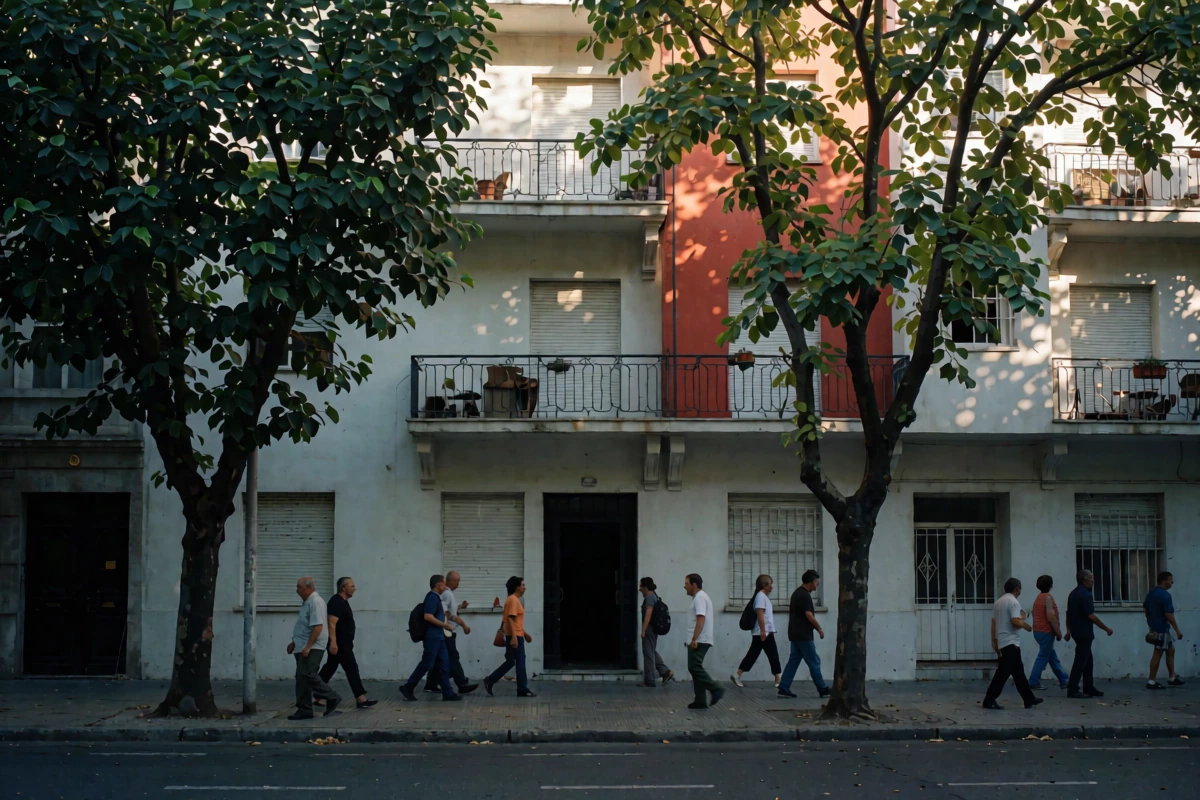
Describe the weekday you need
Start a Buenos Aires neighbourhood comparison with the places you will visit repeatedly: work, school, a clinic, and groceries. Add a park, station, or friend's home only when they matter to your week. Mark which trips must happen at a fixed time and which can move. A neighbourhood that looks attractive on a map may be impractical if the daily route includes a long walk, stairs, an unreliable connection, or a difficult return.
Use the city transport information to sketch each route, then put the exact address into the comparison. Do not compare Palermo, Almagro, or another broad label as if every block offers the same experience. The building entrance, pavement, noise, shade, and nearby services belong to the address you may rent.
Visit the same block at three hours
Visit a possible street in the morning, late afternoon, and the time you would normally return. Listen for noise, look at lighting and crossings, and walk from the building to transport and groceries. If you have children, mobility needs, or a fixed work call, test those conditions rather than relying on a daytime impression. Take notes on the route home as well as the route out.
Ask a local shopkeeper or resident a practical question about the block, but treat the answer as one person's experience. Confirm building access, delivery arrangements, and current transport with the relevant provider. A neighbour may know a useful shortcut; the city page is still the better source for public transport information and current visitor guidance.
Compare the home with Canadian routines
A Canadian household may need a quiet room for work, a safe place for bicycles, a lift, a nearby pharmacy, or a route that works in heavy rain. Put those needs beside the proposed Argentine address. Include the time needed to call family in Canada, receive a parcel, shop for familiar food, and reach a service in Spanish. The result will be more useful than a generic list of popular districts.
Ask the landlord or building administration about locks, common areas, deliveries, repairs, and any written conditions before paying. Keep housing questions with the written terms and applicable tenant information. This page can help you compare daily life, but it cannot interpret a lease or determine whether a particular contract is enforceable.
Choose the next street to investigate
Score two or three exact addresses against the same route, service, comfort, access, and backup questions. If one address wins only because it has a better view, revisit the fixed obligations that make a week work. A short first rental or reversible arrangement can give you better evidence than committing to a long term before you have lived the route.
Recheck transport information and the building details before signing. Construction, service changes, prices, and opening hours can move. Keep the final comparison with its date, and confirm any legal or housing consequence with the responsible authority or qualified professional.
Decide what to test next
If two addresses remain close, spend one ordinary day near each and compare the same grocery and transport route. Add the work and evening route if they matter. Ask the proposed landlord for written terms only after the daily-life comparison is credible. Keep the decision tied to the exact block, apartment, and schedule rather than to a neighbourhood reputation.
Construction, rent, transit, and building conditions can shift. Date your notes and revisit the street before a longer commitment, especially when the first visit happened during a quiet weekend.
Include the cost and time of the route in the housing decision. A cheaper apartment may require more taxis, longer transfers, or paid delivery, while a central address may trade distance for noise or less space.
Common questions
Which Buenos Aires neighbourhood is best for Canadians?
There is no universal best neighbourhood. The comparison depends on routes, budget, household, access needs, and the exact building.
Should I choose from an online ranking?
Use rankings as a shortlist only. Visit the exact block and verify transport, services, noise, and the return route.